
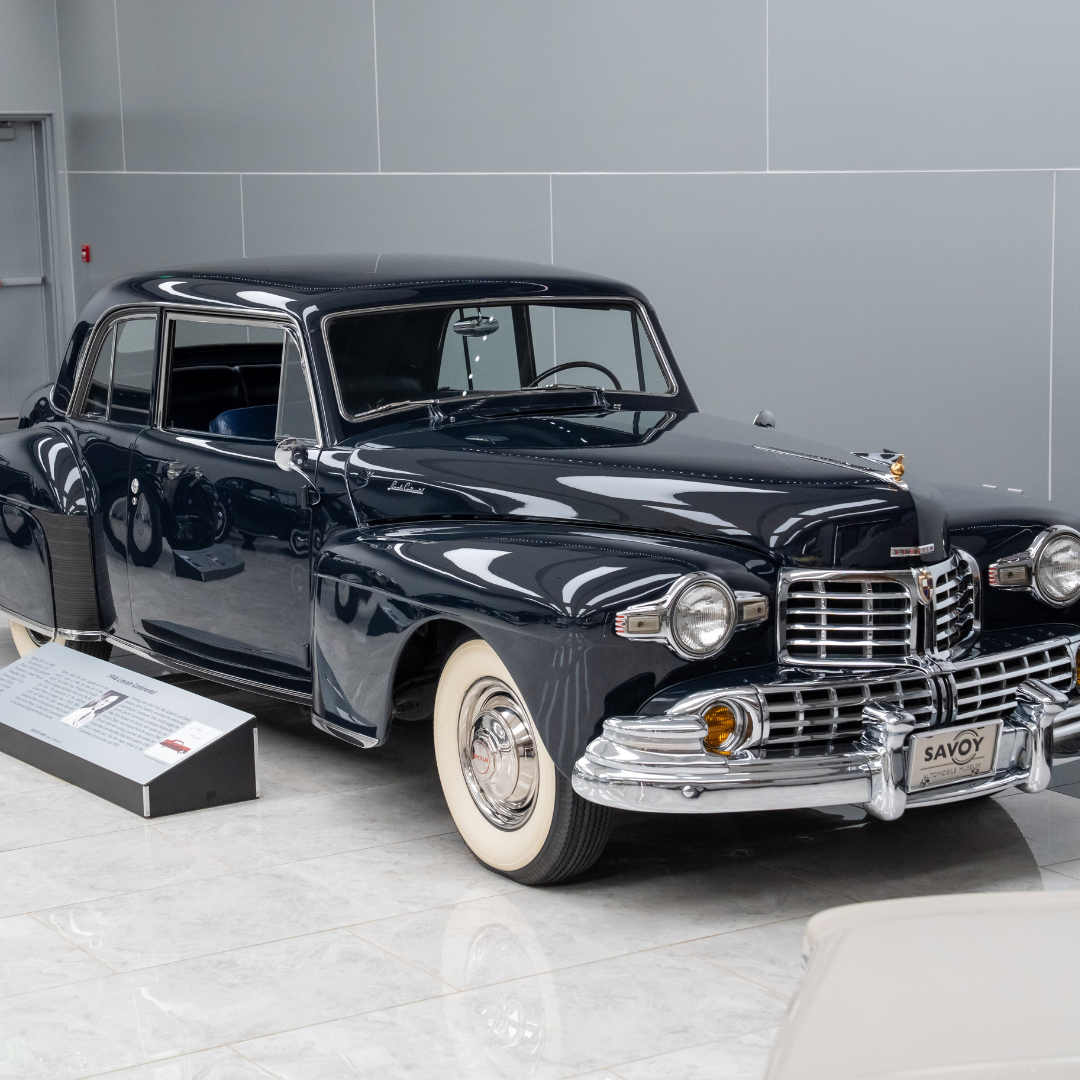
The first Lincoln Continental rolled off the assembly line on September 2, 1939, with Edsel Ford behind the wheel. Teaming up with Bob Gregorie, his chief designer, and eschewing the long, painstaking developmental design process, the pair opted for a quicker, more informal method. Their synergistic approach took an initial design to full production in a matter of weeks. Mr. Ford and Mr. Gregorie, as they referred to each other, shared a mutual conservative taste in automobile design lacking excessive ornamentation and featuring clean, crisp lines. This unorthodox methodology served the company well, allowing new design chief Raymond Loewy to quickly turn out the first post-war edition of the Continental in short order. Continental’s reputation for refined, elegant appearance attracted loyal customers.
In 1946, the most prominent element was a redesigned front end with a “mouth organ” grille, built-in fog lamps, and restyled bumpers. Trim and interior updates rounded out the car’s fresh look. Impressed, architect Frank Lloyd Wright declared it “…the most beautiful car in the world” and promptly bought two. Celebrating the Continental’s selection as a pace car for the Indianapolis 500, a new color, “Pace Car Yellow”, was available. In 1946, a Continental Coupe was one of eight vehicles selected “for excellence as a work of art” by the Museum of Modern Art. Edsel said, “Father made the most popular car in the world. I want to make the best car in the world.” Edsel, whose sense of design is fondly remembered as a “finesse”, achieved his dream.
This 1946 Lincoln Continental Coupe is part of the Savoy Collection.